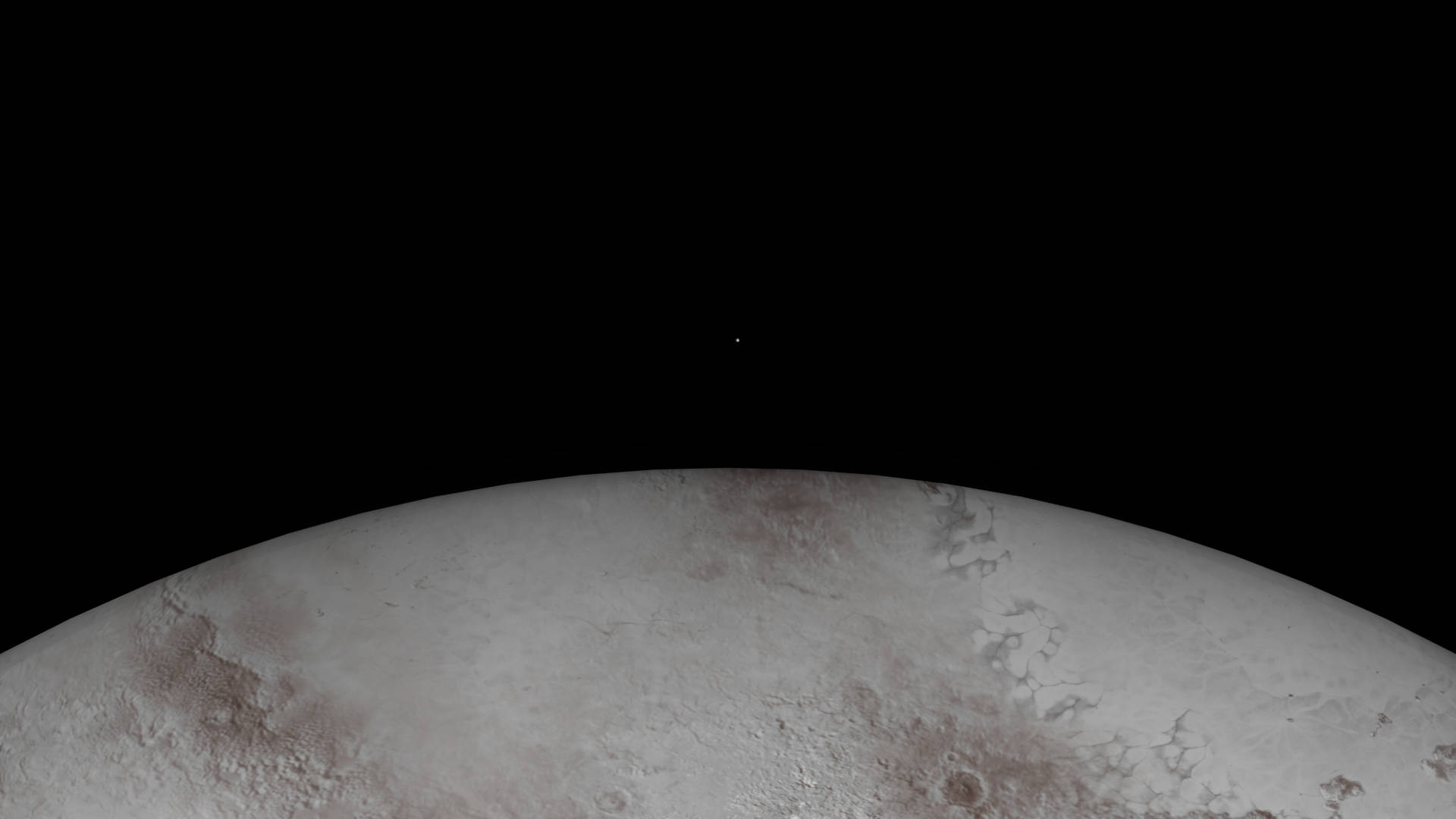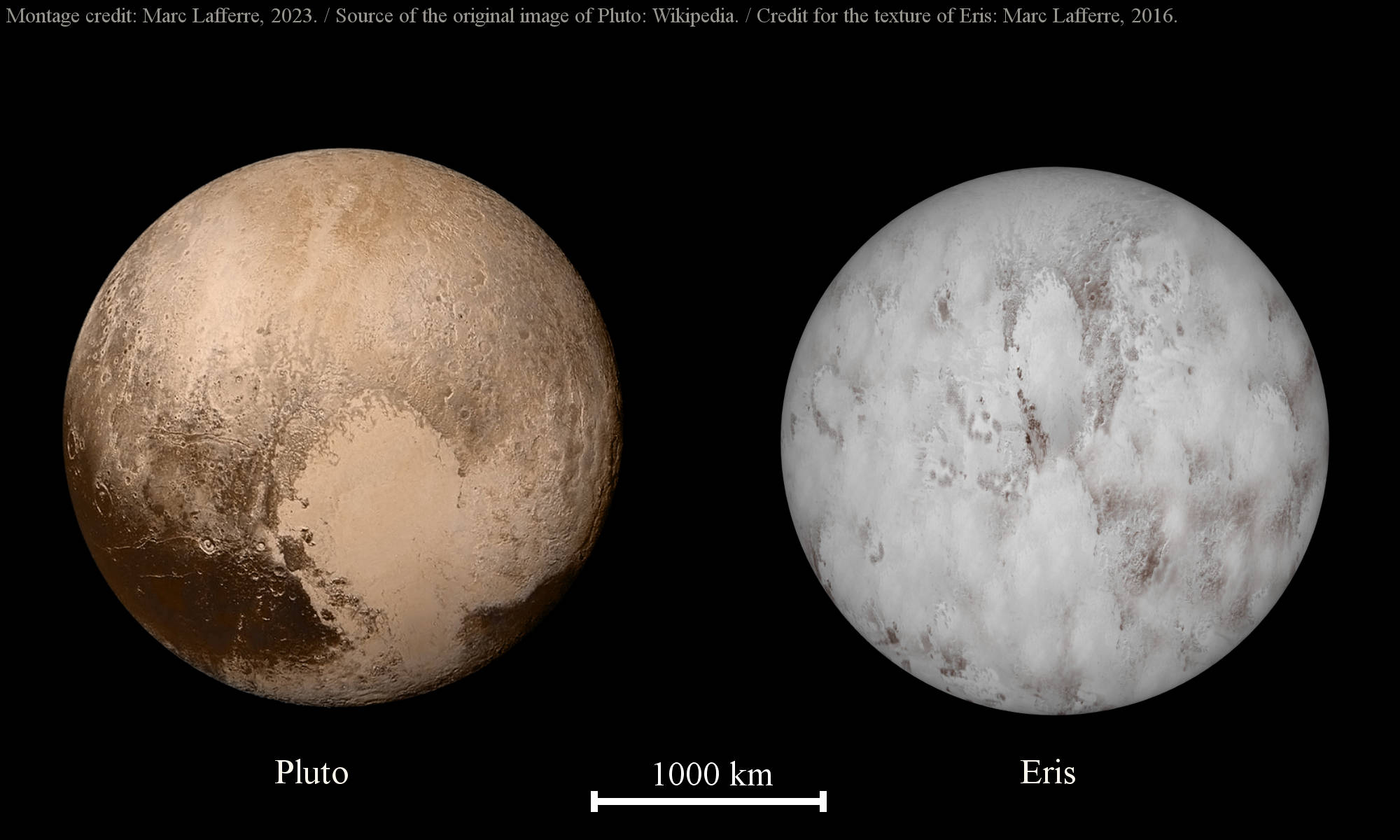
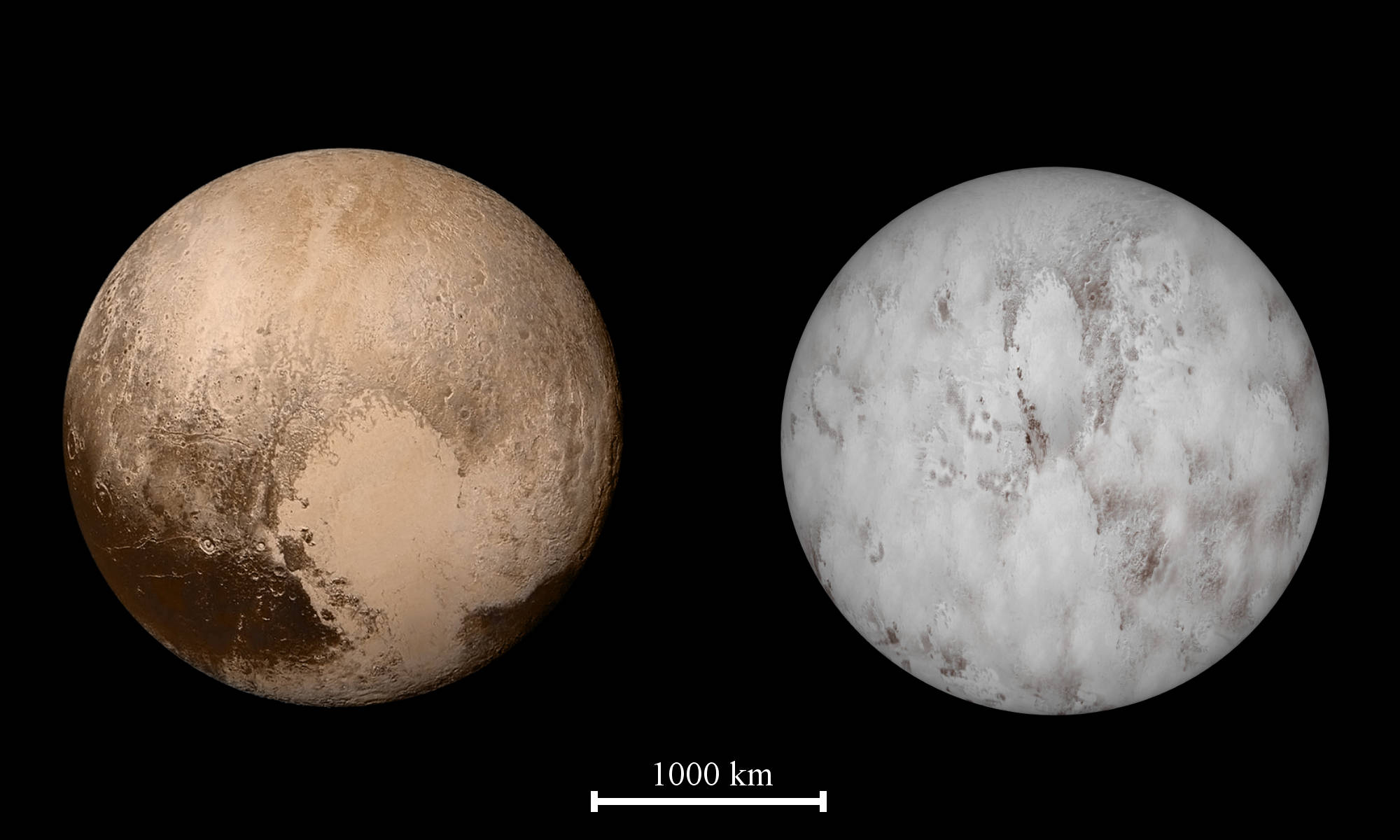
This view reveals the two major dwarf planets of the Solar System, Pluto and Eris, at scale. Both worlds are almost the same size. Eris is the most massive dwarf planet in the Solar System and is slightly smaller than Pluto. Therefore, the mean density of Eris is higher than the mean density of Pluto. Remarkable views of Pluto were obtained from the New Horizons spacecraft during its historic flyby of Pluto and Charon on July 14, 2015. Eris evolves much farther from the Sun and no exploration spacecraft has ever been sent to that mysterious world that may be relatively bright. The view of Eris in this composite image is purely hypothetical.
Credit for the original view of Pluto:
NASA/Johns Hopkins University Applied Physics Laboratory/Southwest Research
Institute/Alex Parker.
Credit for the original texture of Eris:
Marc Lafferre, 2016.
Montage credit:
Marc Lafferre, 2023.
(Natural intelligence)