Infographics 2025

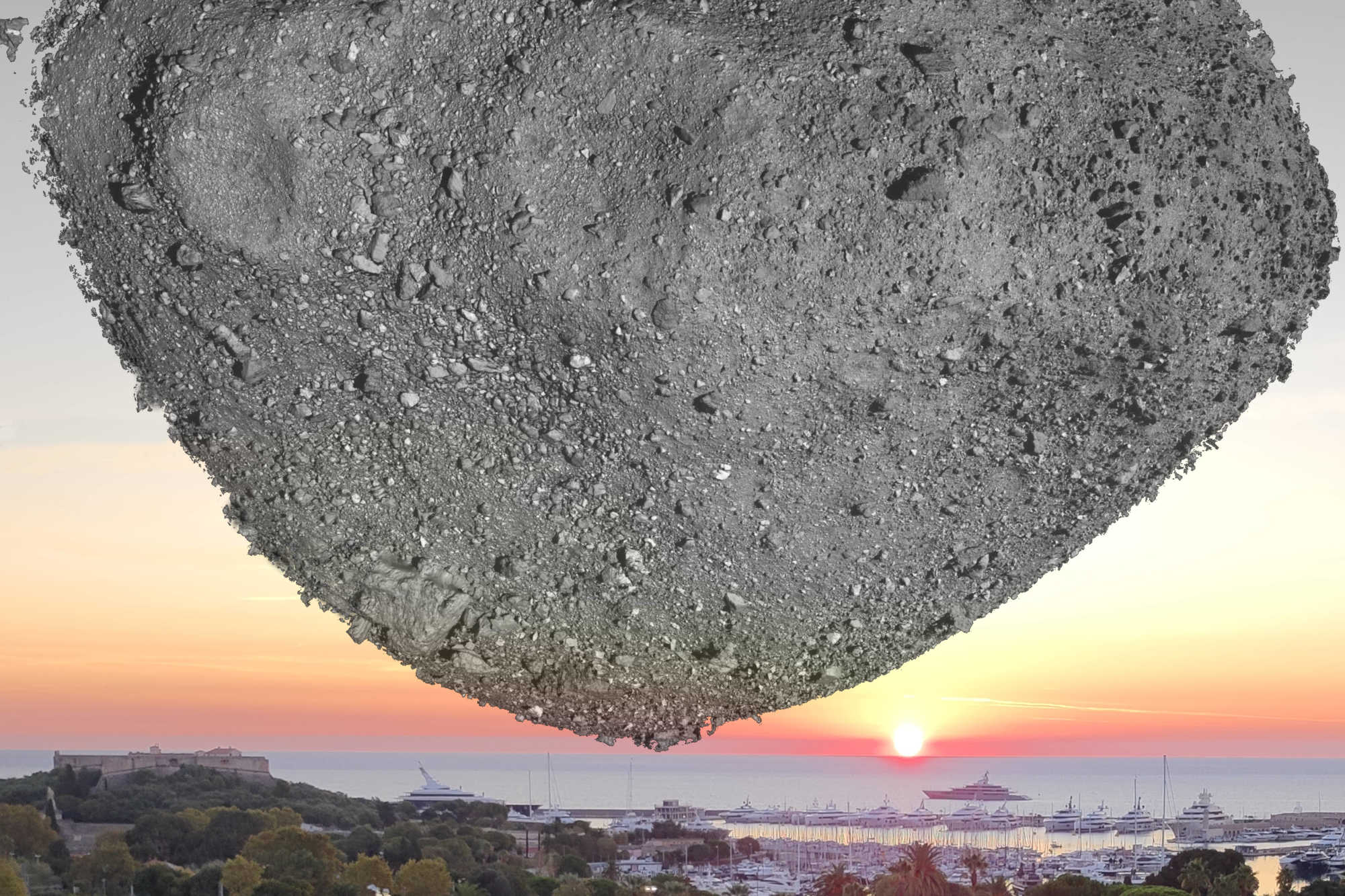
The asteroid Bennu in the distance at the level of Le Fort Carré in Antibes, France
The Asteroid Bennu in the distance at the level of 
    Le Fort Carré at scale in Antibes, France. Credit for the original view of Bennu: NASA/Goddard/University of 
    Arizona. Montage credit: Marc Lafferre, 2025.

This view reveals the asteroid Bennu in the distance at the level of Le Fort Carré at scale in Antibes in France. The equatorial diameter of Bennu represents around 565 meters. The Fort Carré is located approximately 917 meters from the observer and the lateral field of view here is about 34 degrees. Bennu is an Apollo asteroid or an Earth-crossing asteroid that represents an extremely small risk of collision with the Earth in the coming centuries. There is a cumulative chance of Terrestrial impact of approximately 1 in 1750 between 2178 and 2290 with the highest risk occurring on 24 september 2182. Bennu has been explored by the OSIRIS-REx spacecraft.

Credit for the original view of Bennu: NASA/Goddard/University of Arizona.
Montage credit: Marc Lafferre, 2025.
(Natural intelligence)
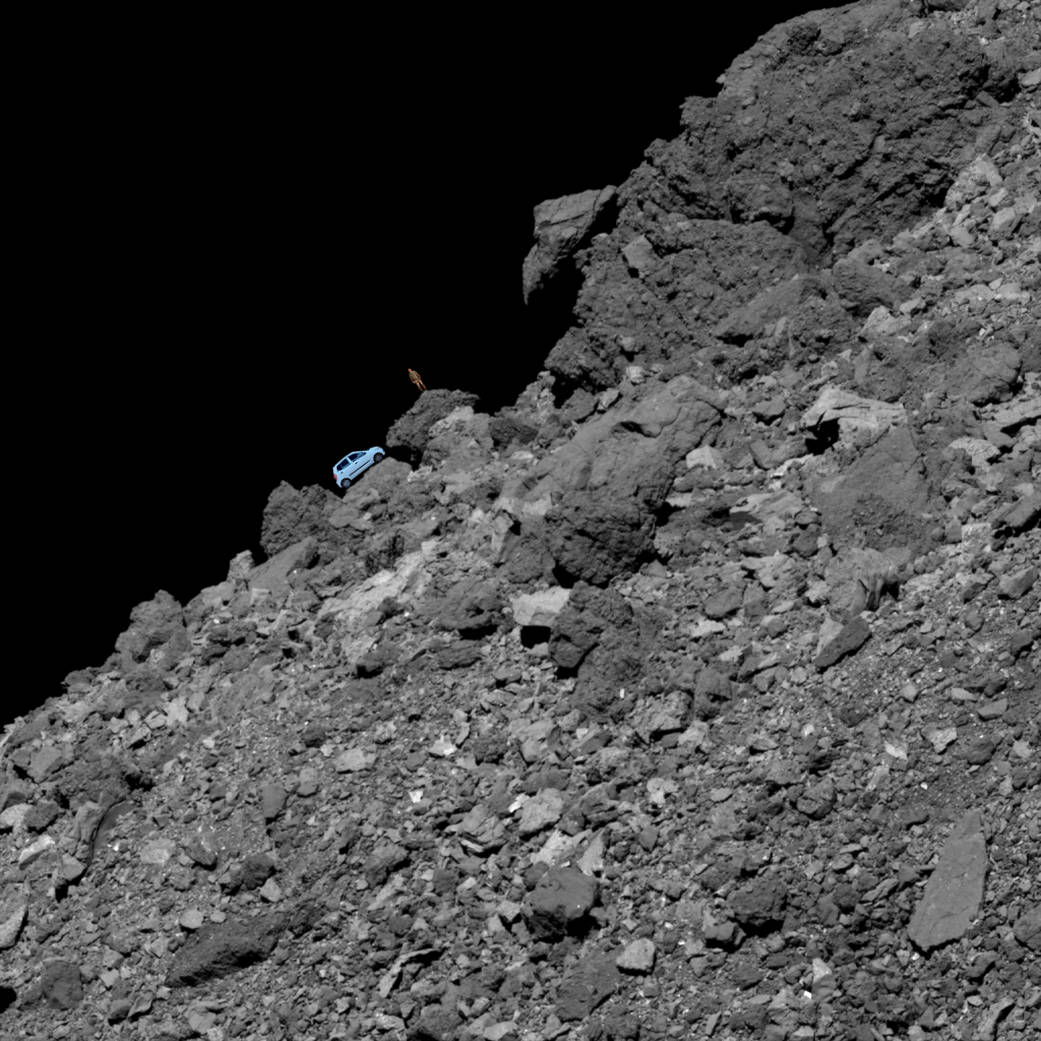
The surface of the asteroid Bennu with a car and an individual at scale
The surface of the asteroid Bennu with a car and an individual at 
    scale. Credit for the original view of Bennu: NASA/Goddard/University of Arizona. Montage credit: Marc Lafferre, 
    2025.

This view reveals the surface of the asteroid Bennu obtained on April 11, 2019 with the PolyCam camera of the OSIRIS-REx spacecraft proposed by NASA. The field of view represents approximately 211 feet or 64.4 meters. A small car and an individual were incorporated into the environment for the scale. The mean diameter of Bennu is 490.06 meters or 1608 feet.

Credit for the original view of Bennu: NASA/Goddard/University of Arizona.
Montage credit: Marc Lafferre, 2025.
(Natural intelligence)
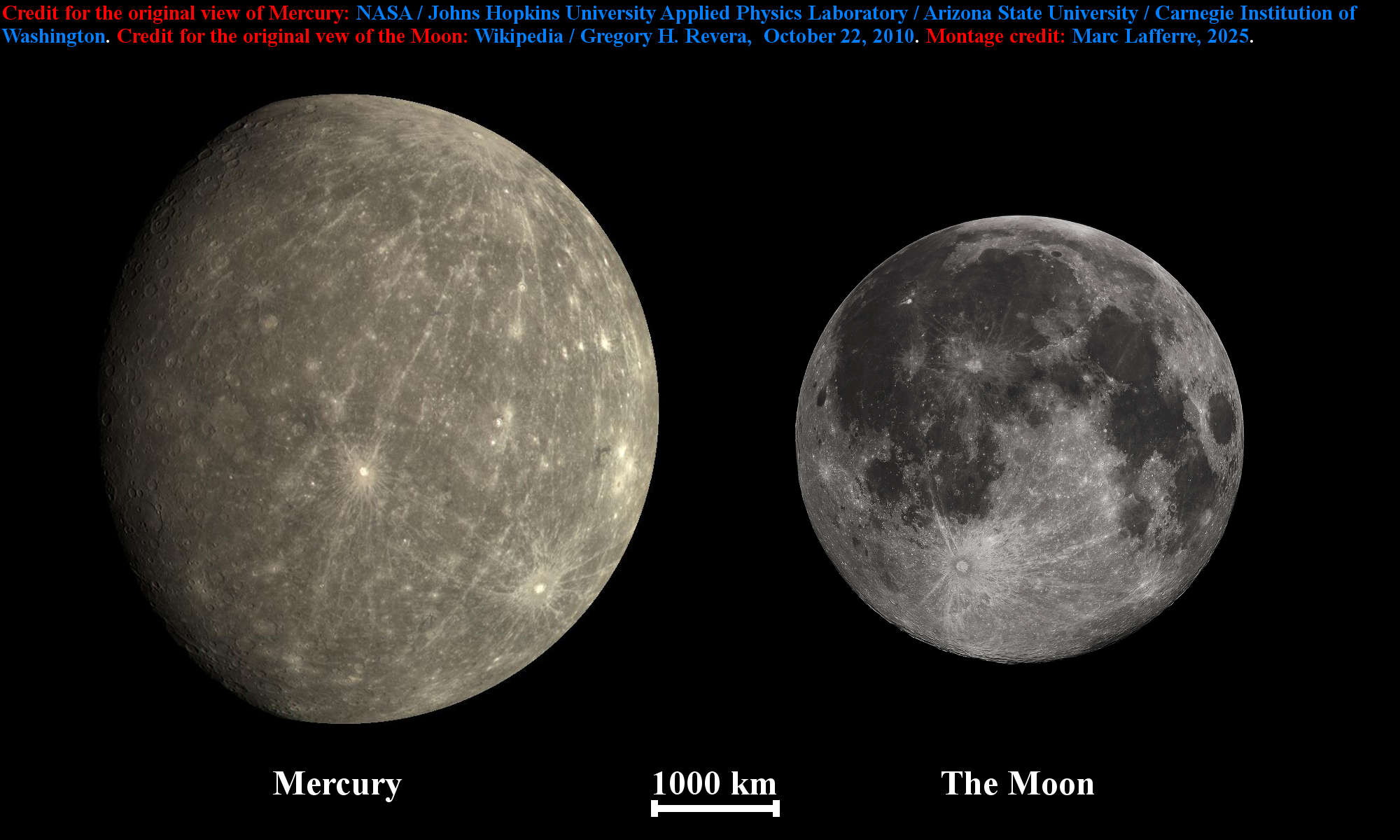
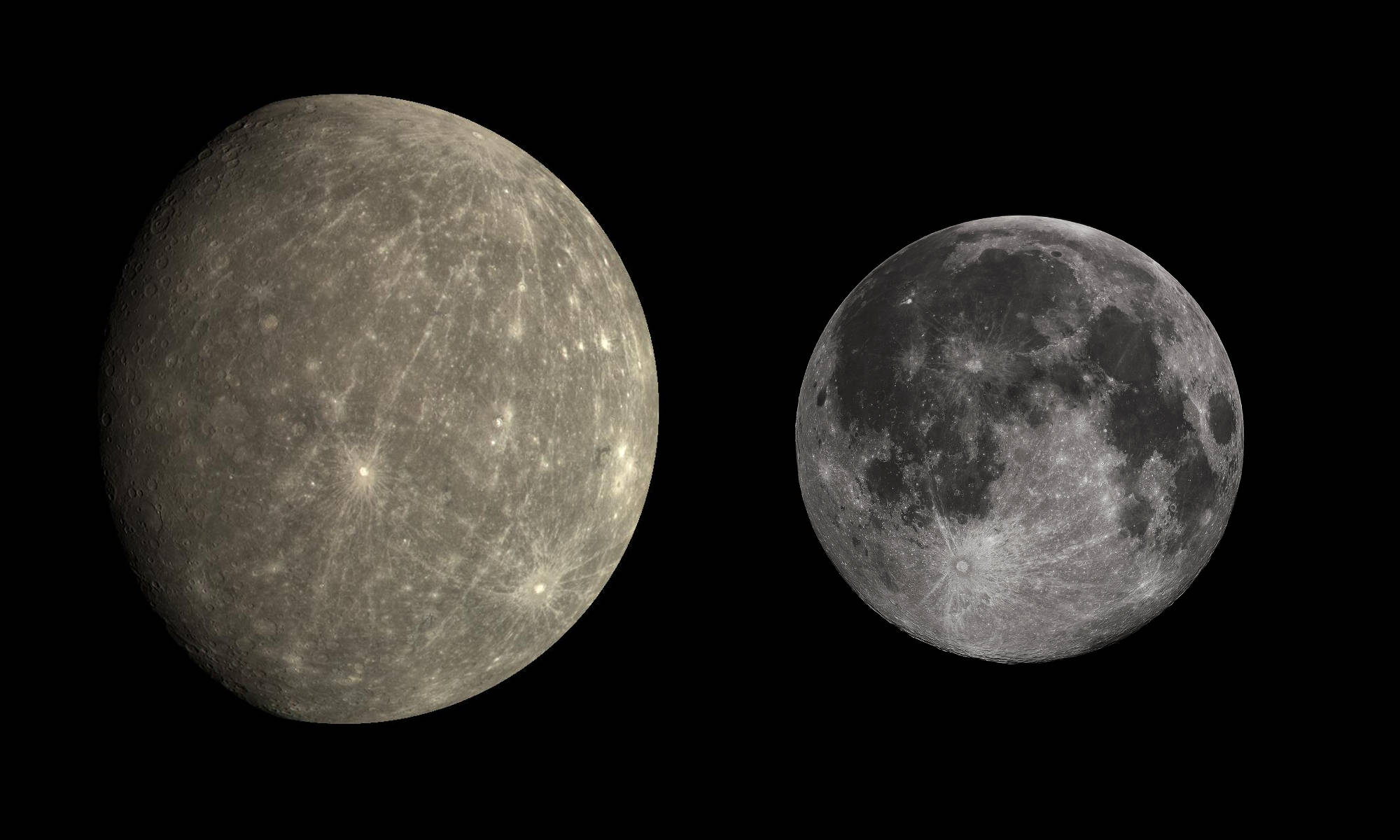
Mercury versus the Moon at scale
Mercury versus the Moon at scale with descriptions. Credit for the 
    original view of Mercury: NASA/Johns Hopkins University Applied Physics Laboratory/Arizona State University/Carnegie 
    Institution of Washington. Credit for the original view of the Moon: Wikipedia/ Gregory H. Revera, October 22, 2010. 
    Montage credit: Marc Lafferre, 2025.
A mosaic of Mercury and the Moon at scale without any 
    description. Credit for the original view of Mercury: NASA/Johns Hopkins University Applied Physics Laboratory/Arizona 
    State University/Carnegie Institution of Washington. Credit for the original view of the Moon: Wikipedia/ Gregory H. 
    Revera, October 22, 2010. Montage credit: Marc Lafferre, 2025.

The composite views of the table reveals Mercury, the nearest planet to the Sun, as well as the Moon at scale. Mercury and our moon, The Moon, look alike to a certain extent at first sight. Both worlds are devoid of any significant atmosphere and are heavily cratered. The day on Mercury is extremely long and the environmental temperature at the level of the surface exposed to the Sun can be as high as about 420 degrees Celsius, 788 degrees Fahrenheit or 693 Kelvin. No exploration spacecraft has ever reached the surface of Mercury.

Credit for the original view of Mercury: NASA/Johns Hopkins University Applied Physics Laboratory/Arizona State University/Carnegie Institution of Washington.
Credit for the original view of the Moon: Wikipedia/ Gregory H. Revera, October 22, 2010.
Montage credit: Marc Lafferre, 2025.
(Natural intelligence)
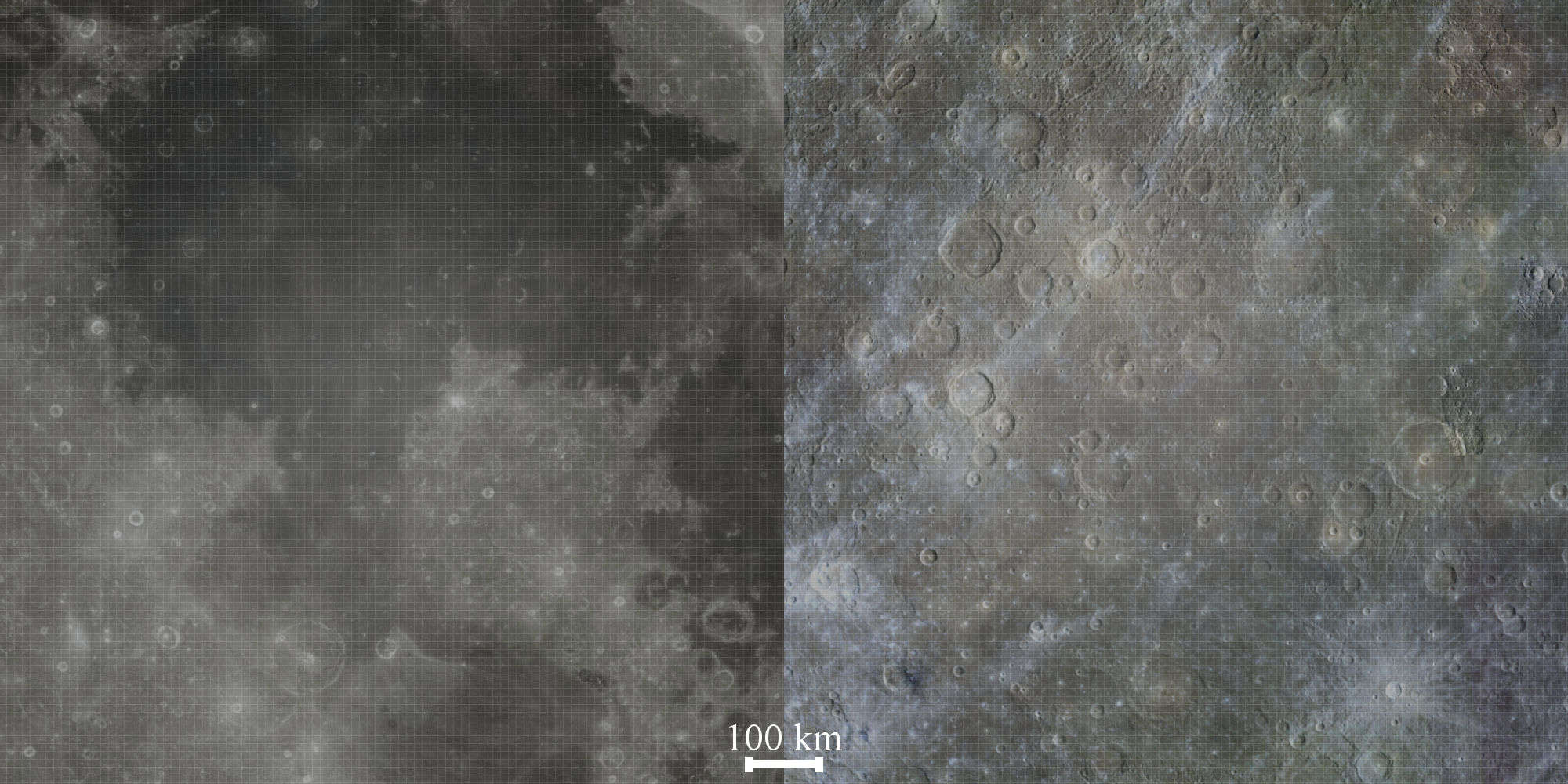
The surface of the Moon in its visible part from the Earth versus the surface of Mercury at scale
The terrain on the Moon in its visible part from the Earth compared 
    to the terrain on Mercury at scale. Credit for the original image of the Moon: NASA/LRO/LROC. Credit for the original 
    image of Mercury: NASA/Messenger. Montage credit: Marc Lafferre, 2025.

The terrain on the surface of the Moon, in its visible part from the Earth, on the left part of the mosaic, is compared, at scale, to the terrain on the surface of Mercury displayed in the right part of the mosaic. The relatively dark part of the terrain on the Moon represents a portion of a "Lunar sea". Lunar seas that appear relatively uniform from outer space are closely related to an ancient volcanism.

Credit for the original image of the Moon: NASA/LRO/LROC.
Credit for the original image of Mercury: NASA/Messenger.
Montage credit: Marc Lafferre, 2025.
(Natural intelligence)
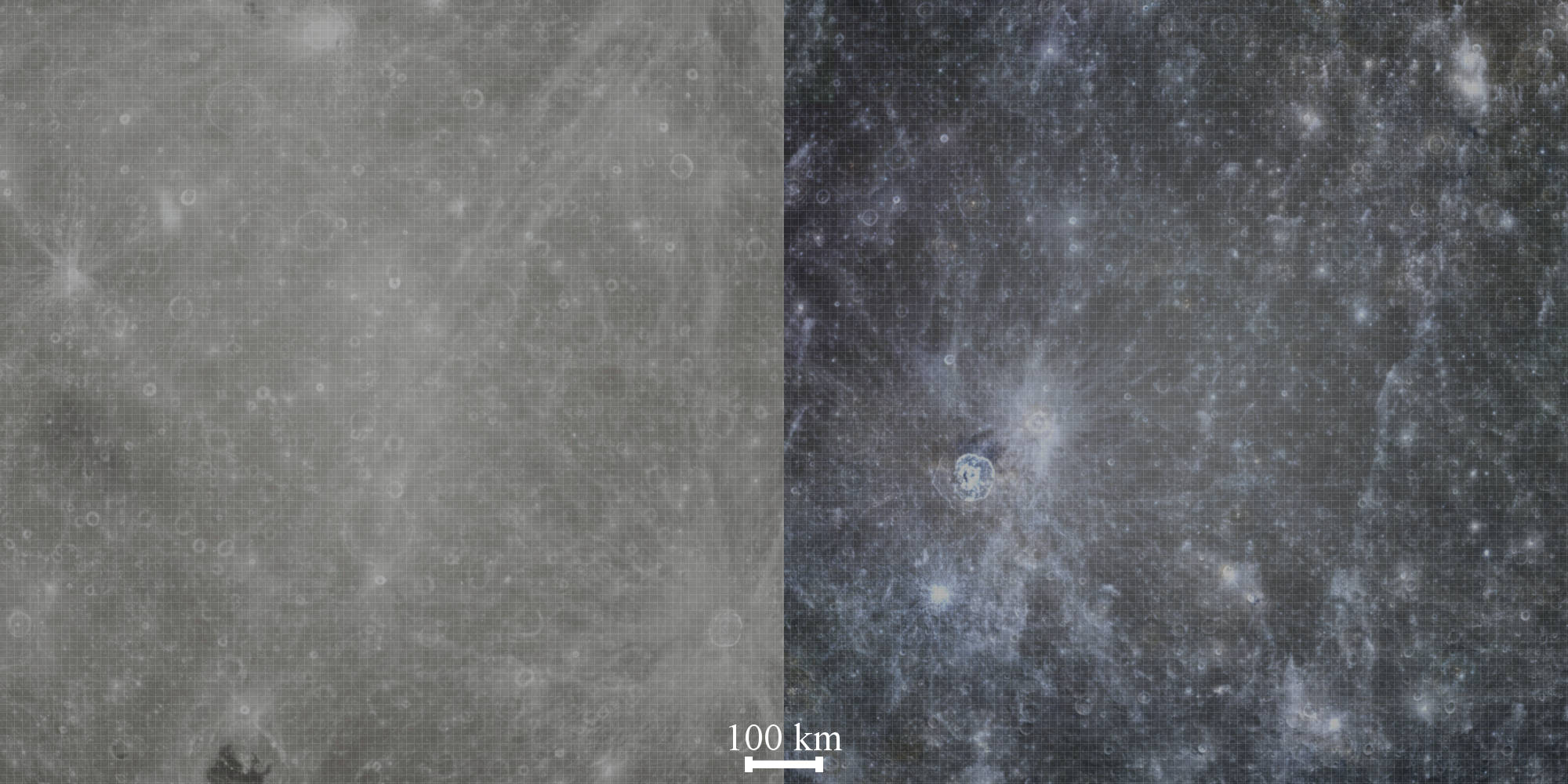
The surface of the Moon in its hidden part from the Earth versus the surface of Mercury at scale
The terrain on the Moon in its hidden part from the Earth compared 
    to the terrain on Mercury at scale. Credit for the original image of the Moon: NASA/LRO/LROC. Credit for the original 
    image of Mercury: NASA/Messenger. Montage credit: Marc Lafferre, 2025.

This mosaic of views reveals the terrain on the surface of our moon, The Moon, as well as the terrain on the surface of the planet Mercury at scale. The terrain on the surface of the Moon can be found on the side of the planetary body we never see from the Earth. Both worlds are devoid of any significant atmosphere so that any impact crater can remain stable or keep its shape for long periods of time.

Credit for the original image of the Moon: NASA/LRO/LROC.
Credit for the original image of Mercury: NASA/Messenger.
Montage credit: Marc Lafferre, 2025.
(Natural intelligence)
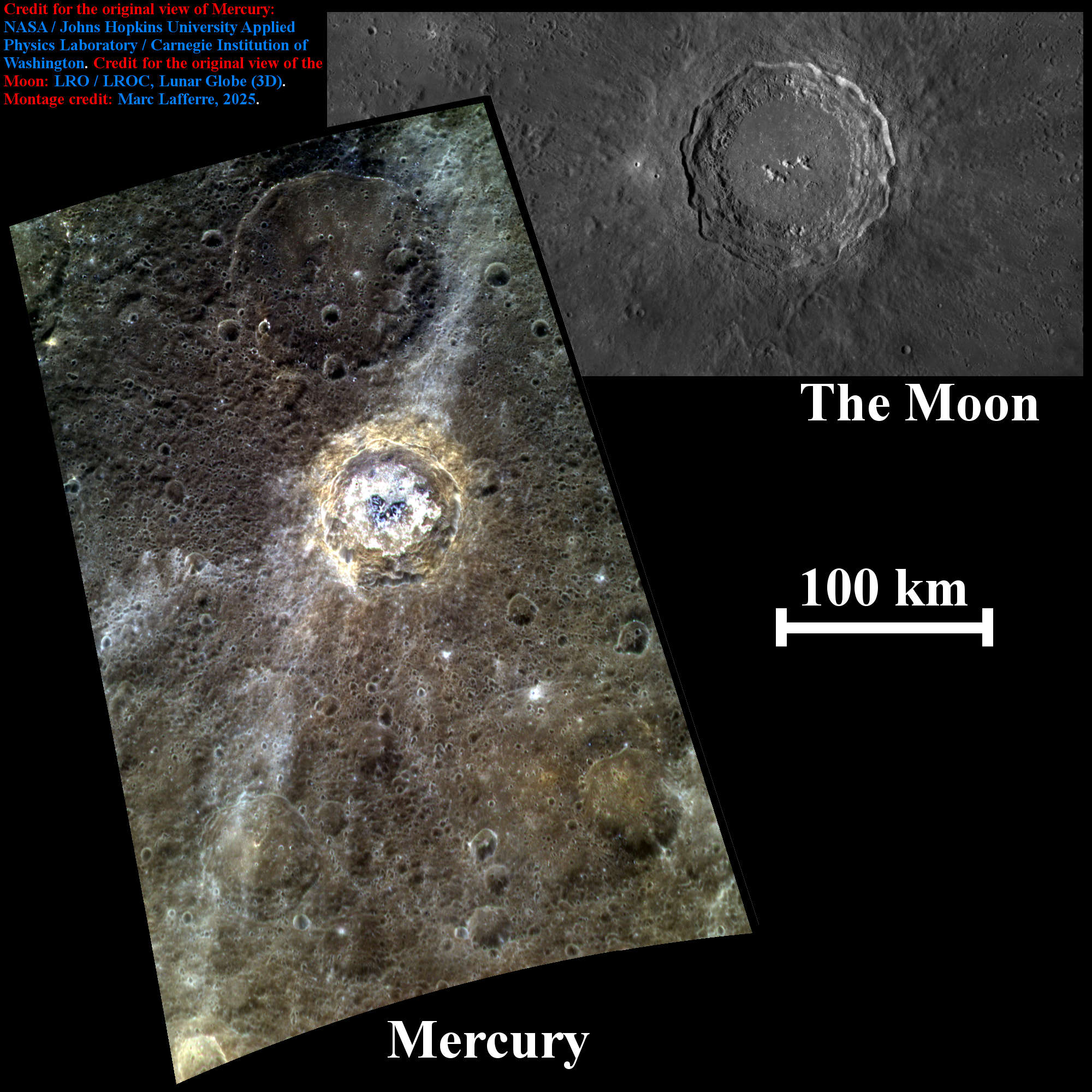
A portion of the surface of Mercury with the de Graft crater compared to a portion of the Moon with another major crater
A portion of the surface of Mercury with the crater known as 
    de Graft compared to the surface of the Moon with unveiling a major crater. Credit for the original image of Mercury: 
    NASA/Johns Hopkins University Applied Physics Laboratory/Carnegie Institution of Washington. Credit for the original 
    image of the Moon: LRO/LROC, Lunar Globe (3D). Montage credit: Marc Lafferre, 2025.

The mosaic above reveals a portion of the surface of Mercury with the crater known as de Graft as well as a portion of the surface of the Moon unveiling another major crater. The diameter of the de Graft crater represents about 68 kilometers (aroung 42 miles). The original view of the surface of Mercury was acquired from the Messenger spacecraft during its orbital mission around Mercury.

Credit for the original image of Mercury: NASA/Johns Hopkins University Applied Physics Laboratory/Carnegie Institution of Washington.
Credit for the original image of the Moon: LRO/LROC, Lunar Globe (3D).
Montage credit: Marc Lafferre, 2025.
(Natural intelligence)
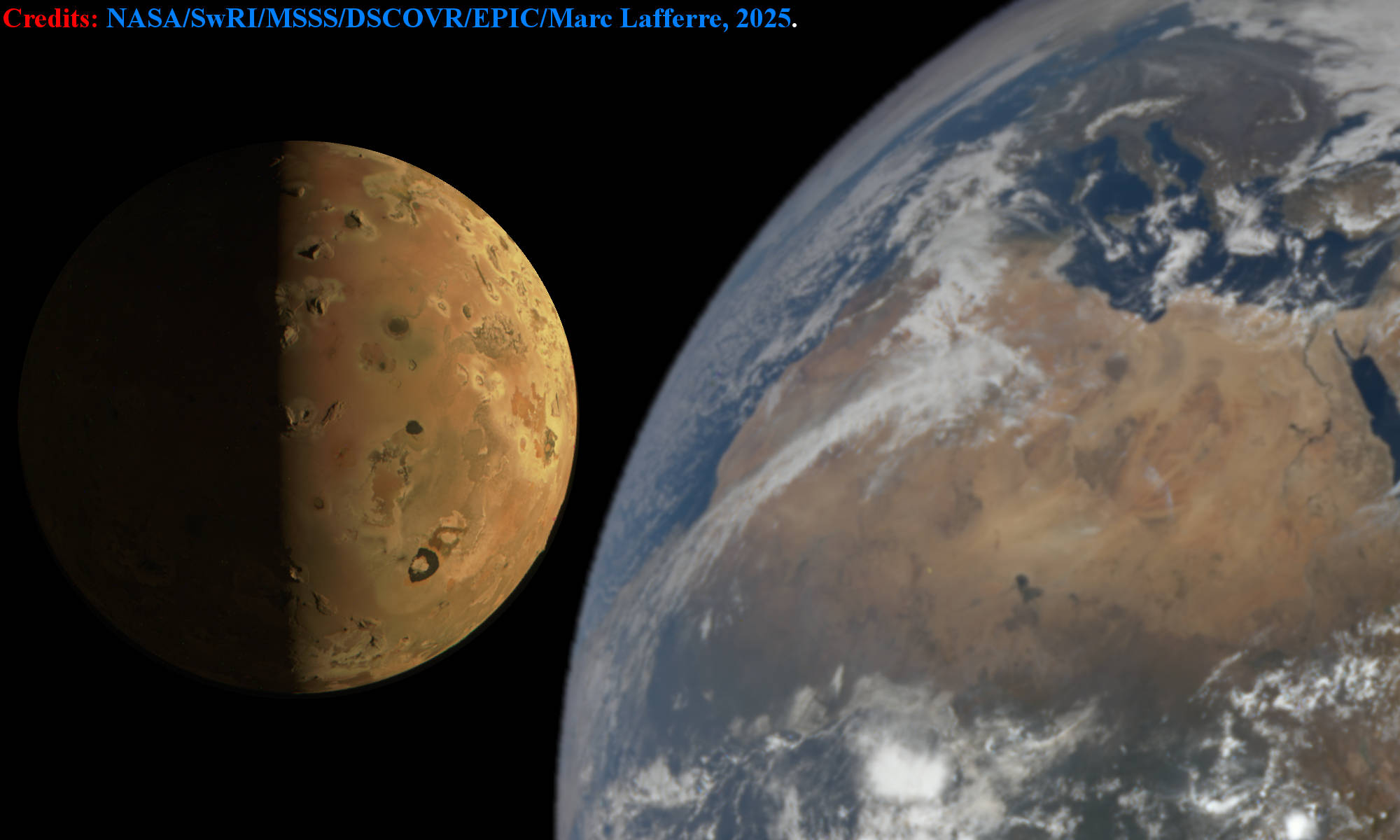
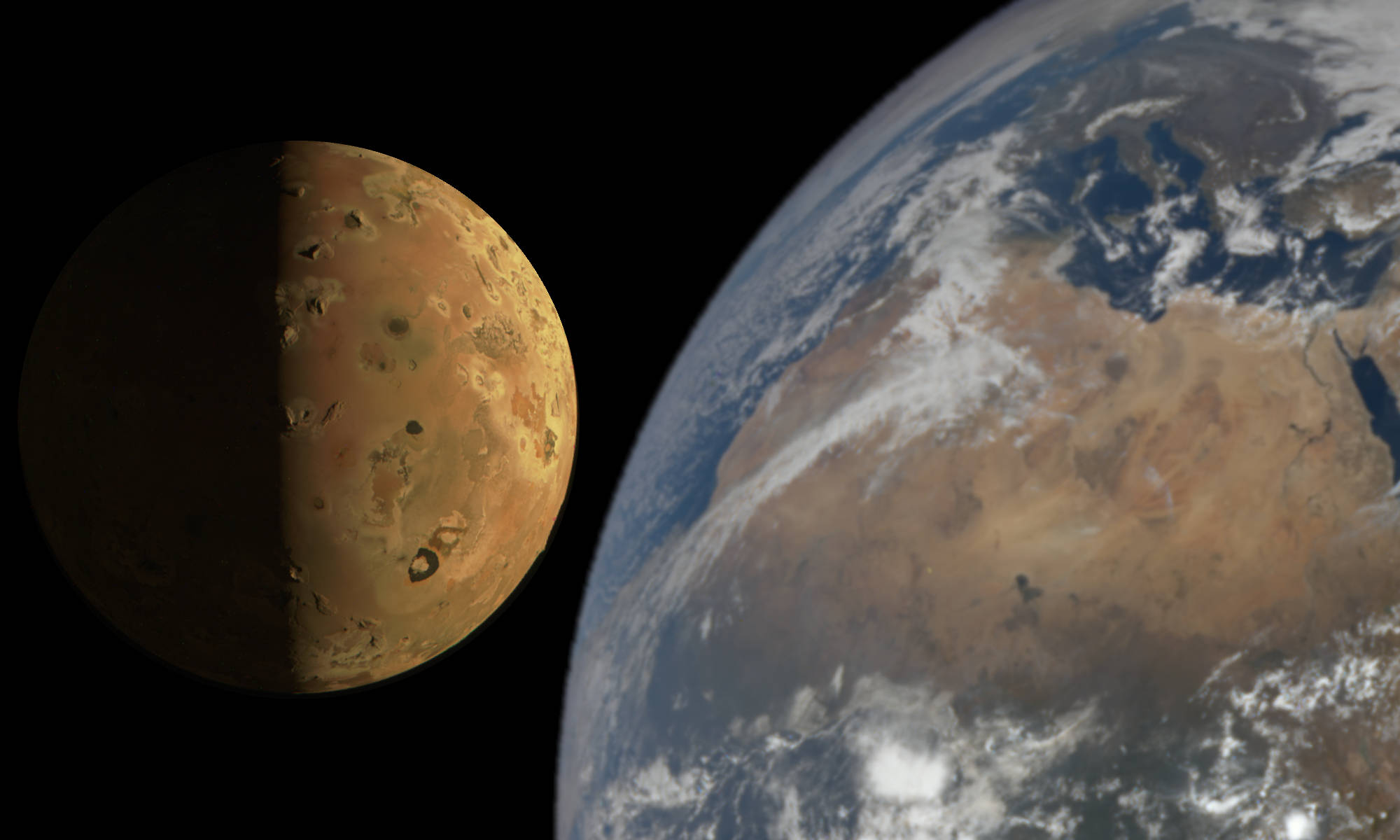
Io and a portion of the Earth at scale
Io and a portion of the Earth at scale. Credit for the 
    original image of Io: NASA/SwRI/MSSS. Credit for the original image of the Earth: DSCOVR/EPIC. Montage credit: 
    Marc Lafferre, 2025.
Io and a portion of the Earth at scale. Credit for the 
    original image of Io: NASA/SwRI/MSSS. Credit for the original image of the Earth: DSCOVR/EPIC. Montage credit: 
    Marc Lafferre, 2025.

This image represents a composite view of Io and of a portion of the Earth at scale. The original image of Io was acquired from the Juno spacecraft during its orbital mission in the Jupiter system. The original image of the Earth was obtained with the EPIC instrument of the DSCOVR spacecraft or observatory. Io represents the most active world in the Solar System, volcanically or geologically speaking.

Credit for the original image of Io: NASA/SwRI/MSSS.
Credit for the original image of the Earth: DSCOVR/EPIC.
Montage credit: Marc Lafferre, 2025.
(Natural intelligence)
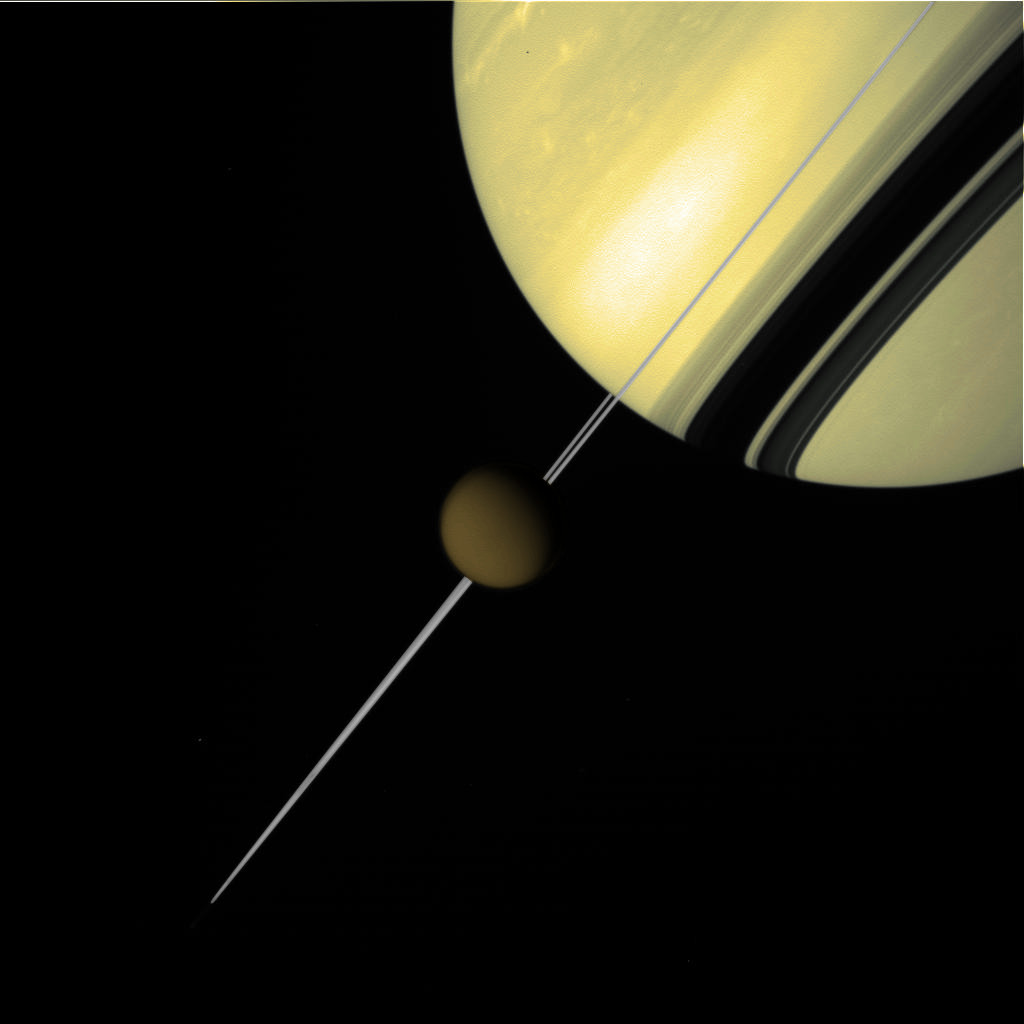
Titan and Saturn with its rings in the distance from the Cassini orbiter on May 6, 2012
Titan, Saturn and its rings in the distance from the Cassini 
    orbiter on May 6, 2012. Credit for the original image: NASA/JPL-Caltech/Space Science Institute. Credit for the 
    colorization process of the original view: Marc Lafferre, 2025.

This image represents a colorized view of Titan, Saturn and its rings produced thanks to data acquired from the Cassini orbiter on May 6, 2012. The file name of the original view is W00074079.jpg. The original image was obtained via the mobilization of the CL1 filter and of the CL2 filter. The deep and opaque atmosphere of the giant moon of Saturn prevents us from discerning surface features from outer space in the visible spectrum.

Credit for the original image: NASA/JPL-Caltech/Space Science Institute.
Credit for the colorization process of the original image: Marc Lafferre, 2025.
(Natural intelligence)
Back to main page